Hip flexor stretches are crucial for flexibility, athletic performance, and pain reduction, restoring movement patterns – a comprehensive guide is readily available!
Experts recommend these stretches, easily accessible “whenever, wherever,” for optimal hip health and overall well-being․
What are Hip Flexors?
Hip flexors are a group of muscles responsible for bringing your knee up towards your chest, and flexing the hip joint․ These muscles include the iliopsoas (a combination of the iliacus and psoas major), rectus femoris, sartorius, and tensor fasciae latae․
They play a vital role in numerous daily movements like walking, running, kicking, and even simply lifting your legs․ Because of their constant use, they are prone to becoming tight, impacting posture and movement efficiency․ Understanding their function is key to appreciating the benefits of targeted stretching․ A guide to hip flexor stretches emphasizes their importance for overall physical health․
Maintaining their flexibility is essential for optimal performance and injury prevention․
Why Stretch Your Hip Flexors?
Stretching your hip flexors offers a multitude of benefits, extending beyond improved flexibility; Regular stretching can enhance athletic performance by increasing range of motion and power output; It also actively works to decrease pain, particularly in the lower back, hips, and knees․
Furthermore, stretching restores normal movement patterns, correcting imbalances caused by prolonged sitting or intense activity․ A comprehensive guide to hip flexor stretches highlights these advantages․ By releasing tension in these muscles, you can improve posture, reduce muscle imbalances, and promote overall physical well-being․ Prioritizing hip flexor health is an investment in your body’s functionality․

Understanding Hip Flexor Tightness
Hip flexor tightness hinders hip rotation, forcing the lower back to compensate, creating tension and impacting muscle activation patterns․
Causes of Tight Hip Flexors
Tight hip flexors often stem from prolonged sitting, a common modern lifestyle factor․ This sustained position shortens the muscles, limiting their natural range of motion․
Additionally, certain exercises, particularly those heavily focused on the quadriceps without balanced hip extension work, can contribute to tightness․
Lack of regular stretching and insufficient warm-up routines before physical activity also play a significant role․
Poor posture, stress, and even dehydration can exacerbate the issue, impacting muscle flexibility and overall function․ Addressing these underlying causes is vital for effective relief and prevention․
Symptoms of Tight Hip Flexors
Tight hip flexors manifest in various ways, often starting with discomfort in the lower back, as the spine compensates for limited hip movement․ This can lead to lower back pain and stiffness․
Individuals may experience difficulty with activities requiring hip extension, like climbing stairs or running․ A noticeable change in posture, such as an anterior pelvic tilt (arched lower back), is also common․
Pain in the hips, groin, or even the knees can radiate from tight hip flexors․ Reduced range of motion and a feeling of tightness in the front of the hip are key indicators․

Dynamic Hip Flexor Stretches (Pre-Workout)
Dynamic stretches, like leg swings and walking lunges with a twist, prepare muscles for exercise, improving range of motion and performance effectively!
Leg Swings (Forward & Sideways)
Leg swings are a fantastic dynamic warm-up for hip flexors, enhancing mobility before workouts․ To perform forward leg swings, stand tall and swing one leg forward and backward, keeping your core engaged and back straight․
Gradually increase the range of motion with each swing, but avoid forcing the movement․ Repeat 10-15 times per leg․ For sideways leg swings, stand sideways and swing your leg across your body and then out to the side․
Maintain control and a stable core throughout․ These swings actively prepare the hip flexors, improving flexibility and reducing injury risk․ They are a simple yet effective addition to any pre-exercise routine․
Walking Lunges with a Twist
Walking lunges with a twist dynamically stretch hip flexors while engaging the core․ Begin in a lunge position, then twist your torso towards the front leg, keeping your back straight and core engaged․
As you step forward into the next lunge, twist towards that side․ This rotational movement adds an extra dimension to the stretch, targeting the hip flexors and obliques simultaneously․
Focus on controlled movements and maintain balance throughout․ Perform 10-12 lunges per leg, ensuring a full range of motion․ This exercise improves hip mobility, core stability, and overall athletic performance, making it ideal for pre-workout preparation․
Knee to Chest Walks
Knee to chest walks are a gentle yet effective dynamic stretch for hip flexors․ Lie on your back with knees bent and feet flat․ Bring one knee towards your chest, clasping your hands behind it or around your shin․
Engage your core and slowly “walk” your knees towards your chest, alternating legs with each step․ Maintain a controlled pace and focus on feeling the stretch in your hip flexors․
This exercise improves hip mobility and flexibility, preparing the muscles for activity․ Perform 10-15 walks, ensuring a comfortable range of motion․ It’s a great pre-workout warm-up or a light recovery exercise․

Static Hip Flexor Stretches (Post-Workout/Cool-Down)
Static stretches, held after exercise, enhance flexibility and recovery․ Options include the kneeling hip flexor stretch, pigeon pose, and relaxing butterfly stretch․
Kneeling Hip Flexor Stretch
This stretch effectively targets the hip flexors, promoting increased flexibility and range of motion․ Begin by kneeling on one knee, with the other foot flat on the floor in front of you, forming a 90-degree angle․
Ensure your front knee remains aligned over your ankle․ Gently push your hips forward, maintaining a straight back and engaged core․ You should feel a stretch in the front of your hip and thigh of the kneeling leg․
Hold this position for 30 seconds, breathing deeply․ To intensify the stretch, raise the arm on the same side as the kneeling leg overhead, creating a slight lateral bend․ Repeat on the other side for balanced hip flexor lengthening․
Pigeon Pose
Pigeon Pose is a deeper stretch, excellent for opening the hips and releasing tension in the hip flexors and glutes․ Start on your hands and knees․ Bring your right knee forward towards your right wrist, angling your shin across your mat․
Extend your left leg straight back behind you, keeping your hips square to the front․ Lower your torso towards the floor, resting on your forearms or completely extending for a deeper stretch․
Hold for 30 seconds, breathing deeply, and feel the stretch in your right hip․ Repeat on the left side․ Modifications include using a blanket under the hip for support or keeping the back knee bent․
Butterfly Stretch
The Butterfly Stretch is a gentle yet effective stretch targeting the inner thighs, groin, and, indirectly, the hip flexors․ Begin by sitting on the floor with the soles of your feet together, allowing your knees to fall open to the sides․
Gently pull your heels closer to your groin․ Keep your back straight and gently press down on your knees with your elbows to deepen the stretch․ Avoid forcing the stretch; listen to your body․
Hold the position for 30 seconds, breathing deeply․ This stretch improves flexibility and can be modified by leaning forward slightly to increase the intensity․

Advanced Hip Flexor Stretches
Advanced stretches like the Couch Stretch and Deep Squat Hold significantly improve hip flexibility, demanding greater strength and range of motion for optimal results․
Couch Stretch
The Couch Stretch is an intense, yet highly effective, hip flexor stretch often recommended for those seeking significant improvements in flexibility․ To perform this stretch, position one shin against a wall, with the knee bent at a 90-degree angle, and the top of your foot flat against the wall․
Simultaneously, kneel with your other leg in front of you, maintaining an upright torso․ Gently push your hips forward, feeling a deep stretch in the hip flexor of the leg against the wall․
Core discs or towels under the knee can enhance comfort․ Hold this position, focusing on deep breathing, for 30-60 seconds per side․ This stretch targets the rectus femoris, a key hip flexor, and can dramatically improve range of motion․
Deep Squat Hold
The Deep Squat Hold is a powerful stretch that targets the hip flexors, glutes, and ankles simultaneously, promoting overall lower body mobility․ Begin by standing with your feet slightly wider than shoulder-width apart, toes pointed slightly outward․
Slowly lower your hips down as if sitting into a chair, keeping your back straight and chest up․ Aim to descend until your thighs are parallel to the ground, or even lower if your flexibility allows․
Hold this deep squat position, focusing on maintaining good form and feeling a stretch in your hip flexors․ You can use your elbows to gently push your knees outward․ Hold for 30-60 seconds, repeating several times․

Hip Flexor Stretches You Can Do in Bed
Conveniently stretch your hip flexors before sleep or upon waking with simple exercises like supine knee-to-chest poses and towel-assisted reclined stretches!
Supine Knee to Chest
How to Perform: Begin by lying flat on your back with your knees bent and feet flat on the bed․ Gently draw one knee towards your chest, clasping your hands behind your thigh or over your shin․ Maintain a relaxed lower back, avoiding any strain․
Focus & Benefits: This stretch targets the iliopsoas and rectus femoris, key hip flexors․ Holding the stretch for 20-30 seconds allows for a gentle release of tension․ Repeat on the other side․
Modifications: For a deeper stretch, gently pull your knee closer to your chest․ If you experience discomfort, reduce the range of motion․ This is a fantastic, accessible stretch for daily hip flexor care, easily incorporated into your bedtime routine․
Reclined Hip Flexor Stretch with Towel
How to Perform: Lie on your back with legs extended․ Loop a towel around the ball of one foot․ Gently pull on the towel, raising your leg towards the ceiling while keeping your knee slightly bent․ Maintain a neutral spine, pressing your lower back into the bed․
Focus & Benefits: This stretch effectively targets the hip flexors, particularly the iliopsoas․ The towel assists in achieving a deeper stretch without excessive strain․ Hold for 20-30 seconds, focusing on breathing deeply․
Modifications: Adjust the towel’s grip for comfort․ If you feel discomfort, reduce the leg raise․ This gentle stretch is ideal for a relaxing, pre-sleep hip flexor release․

Using Tools for Enhanced Stretching
Core discs or towels simplify exercises, while resistance bands add intensity, improving range of motion and deepening hip flexor stretches effectively․
Core Discs/Sliders
Core discs, or even simple dish towels, significantly enhance the effectiveness of hip flexor stretches, particularly when performing exercises on your back․ To begin, lie supine with bent knees, placing each foot securely on a core disc․ Extend your arms to the sides, maintaining a stable position․
Initiate the movement by lifting your pelvis upwards, simultaneously sliding your heels outwards․ This action actively engages the hip flexors and surrounding muscles․ Focus on utilizing your hamstrings to draw the heels back towards your glutes, returning to the starting position․
This controlled sliding motion increases the stretch intensity and promotes greater flexibility․ Core discs reduce friction, allowing for smoother, more fluid movements, making the exercise accessible for various fitness levels․
Resistance Bands
While the provided text doesn’t directly detail resistance band use, we can infer their application to enhance hip flexor stretches․ Resistance bands add a progressive overload, increasing stretch intensity and promoting muscle activation․ They are versatile tools for modifying existing stretches․
For example, during a kneeling hip flexor stretch, a band looped around the front foot can provide gentle resistance as you extend the hip․ Alternatively, bands can assist in maintaining proper form during dynamic stretches like leg swings, ensuring controlled movements․
Selecting the appropriate band resistance is crucial; start with lighter bands and gradually increase as flexibility improves․ Bands offer a cost-effective way to deepen stretches and target specific muscle groups within the hip flexor complex․

Creating a Hip Flexor Stretching Routine
Regular hip flexor stretching boosts flexibility, improves performance, and reduces pain; incorporate both dynamic warm-ups and static cool-downs for optimal results!
Frequency and Duration
Establishing a consistent routine is key to unlocking the benefits of hip flexor stretching․ Ideally, aim to incorporate these stretches into your regimen at least 2-3 times per week․ However, daily stretching can yield even more significant improvements in flexibility and range of motion, particularly if you spend prolonged periods sitting․
For dynamic stretches, performed as part of a warm-up, 5-10 repetitions of each exercise are generally sufficient․ Static stretches, best suited for cool-downs, should be held for 20-30 seconds per repetition․ Listen to your body and avoid pushing yourself beyond a comfortable stretch․ Consistency, rather than intensity, is the most important factor in achieving lasting results․
Remember to gradually increase the duration and frequency of your stretches as your flexibility improves․
Warm-up and Cool-down
Prioritizing both a warm-up and cool-down is essential when incorporating hip flexor stretches into your fitness routine․ Begin with dynamic stretches – like leg swings and walking lunges with a twist – to prepare your muscles for activity․ These movements increase blood flow and improve range of motion, reducing the risk of injury․
Following your workout, transition to static stretches, such as the kneeling hip flexor stretch or pigeon pose․ Holding these stretches for 20-30 seconds helps to lengthen the muscles and improve flexibility․ A proper cool-down aids in recovery and reduces muscle soreness․
Remember, dynamic before, static after – a simple rule for optimal results!
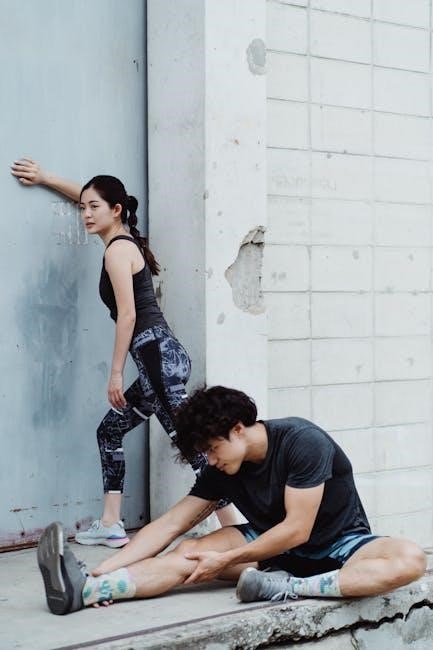
The Connection Between Hip Flexors and Lower Back Pain
Tight hip flexors impact spinal alignment, forcing the lower back to compensate, creating tension and potential pain due to muscle attachments․
How Tight Hip Flexors Affect the Spine
Tight hip flexors significantly restrict hip rotation, compelling the lower back to overcompensate for this limited movement․ This occurs because the back muscles are directly connected at the hip joint, creating a biomechanical imbalance․
When hip flexors are consistently contracted, they pull the pelvis forward, increasing the natural curve in the lower back – known as lordosis․ This exaggerated curvature places undue stress on the spinal joints and surrounding muscles, potentially leading to discomfort and pain․
Furthermore, tightness prevents optimal activation of opposing muscle groups, hindering proper spinal stabilization and contributing to a vicious cycle of muscle imbalances and pain․ Addressing hip flexor tightness is, therefore, vital for spinal health․
Addressing Lower Back Pain Through Hip Flexor Release
Releasing tight hip flexors can directly alleviate lower back pain by restoring proper pelvic alignment and reducing stress on the spine․ By lengthening these muscles, the pull on the lumbar vertebrae diminishes, allowing for a more neutral spinal position․
Implementing a consistent stretching routine, incorporating both dynamic and static stretches, is crucial․ Facilities like Enlightened Recovery offer comprehensive treatment plans combining medical expertise with holistic approaches, focusing on the mind-body connection․
This integrated approach ensures a thorough assessment and personalized plan to address the root causes of pain, not just the symptoms․ Prioritizing hip flexor release is a key component in achieving lasting relief and improved spinal health․

Holistic Recovery and Hip Flexor Health
Enlightened Recovery treats the mind, body, and spirit, combining medical and holistic components for a comprehensive treatment experience and optimal hip health!
The Role of Facilities Like Enlightened Recovery
Enlightened Recovery, conveniently located five minutes from downtown Kalamazoo, represents a new paradigm in holistic health, offering a 90-bed facility dedicated to comprehensive treatment․ Their approach transcends traditional methods by focusing on the interconnectedness of the mind, body, and spirit․
This facility doesn’t simply address symptoms; it aims to uncover and resolve the root causes of discomfort, including issues stemming from tight hip flexors․ By integrating strong medical expertise with holistic therapies, Enlightened Recovery provides a uniquely personalized recovery journey․
They understand that tightness in the hip flexors can significantly impact spinal health and overall well-being, and their services are designed to address these connections effectively․
Combining Medical and Holistic Approaches
Enlightened Recovery’s strength lies in its synergistic blend of robust medical interventions and deeply restorative holistic practices․ This integrated approach acknowledges that true healing requires addressing the physical and emotional components of pain and dysfunction, particularly those linked to hip flexor tightness․
Rather than isolating treatment to the affected area, they consider the whole person, recognizing how interconnected systems influence one another․ This means combining targeted therapies – potentially including guidance on hip flexor stretches – with modalities that nurture mental and spiritual well-being․
The result is a comprehensive treatment experience designed to facilitate lasting recovery and empower individuals to reclaim their optimal health․