Fanimation Remote Control Manual: A Comprehensive Guide (Updated 11/30/2025)
Welcome! This guide details setup, operation, and troubleshooting for Fanimation remotes (CR500, Levon DC, JY1004), ensuring optimal fan control and safety.
Fanimation remote controls are designed to provide convenient and reliable operation of your ceiling fan. These remotes offer features like speed control, light dimming, and directional reversal, enhancing comfort and energy efficiency. This manual serves as a comprehensive resource for users of various Fanimation remote models, including the CR500, Levon Custom DC, and JY1004.
Understanding your remote’s capabilities is crucial for maximizing its benefits. Proper setup and pairing are essential for seamless functionality. This guide will walk you through each step, from initial configuration to troubleshooting common issues. Remember to address potential interference by adjusting the combination code, ensuring a stable connection. Fanimation prioritizes user experience and safety, and this manual reflects that commitment.
Scope of this Manual
This manual provides detailed instructions for Fanimation remote control models CR500, Levon Custom DC, and JY1004. It covers everything from initial setup – including setting the combination code via dip switch configuration – to synchronizing the remote with the receiver unit. We’ll guide you through powering the fan on/off, adjusting speeds, reversing direction for seasonal comfort, and controlling the integrated light functions.
Furthermore, this guide addresses advanced features like timer functionality (where applicable) and potential smart fan integration. Troubleshooting sections offer solutions for common problems like unresponsive remotes or intermittent operation. You’ll also find information on minimizing interference and accessing additional resources, including a full PDF manual and Fanimation support contact details.
Safety Precautions
Before operating your Fanimation fan with the remote, please read these crucial safety guidelines. Always ensure the fan is completely assembled and installed correctly, following the separate installation manual. Do not attempt to disassemble or repair the remote or receiver unit yourself; this could lead to electrical shock or malfunction.
To prevent interference with other devices, adjust the combination code (dip switches) on both the remote and receiver. Keep the remote and receiver dry, and avoid exposing them to extreme temperatures or humidity. Use only the specified battery type for optimal performance and safety; Disconnect power before cleaning the fan or remote. Improper use voids the warranty.

Understanding Your Fanimation Remote
Explore the features! This section details the components of your Fanimation remote, receiver unit functionality, and how they work together for seamless control.
Remote Control Models Covered (CR500, Levon Custom DC, JY1004)
This manual provides comprehensive instructions for three primary Fanimation remote control models: the CR500, the Levon Custom DC, and the JY1004. Each model offers unique features and functionalities tailored to specific Fanimation ceiling fan series. The CR500 is a widely compatible option, while the Levon Custom DC is designed for fans with DC motors, offering enhanced control.
The JY1004 is a versatile controller often included with select fan models. While core functions like speed control and light operation are consistent across all models, specific features – such as timer settings or smart fan integration – may vary. This guide will highlight these differences, ensuring you can effectively utilize your specific remote’s capabilities. Refer to the sections dedicated to each model for detailed instructions.
Remote Control Components & Button Identification
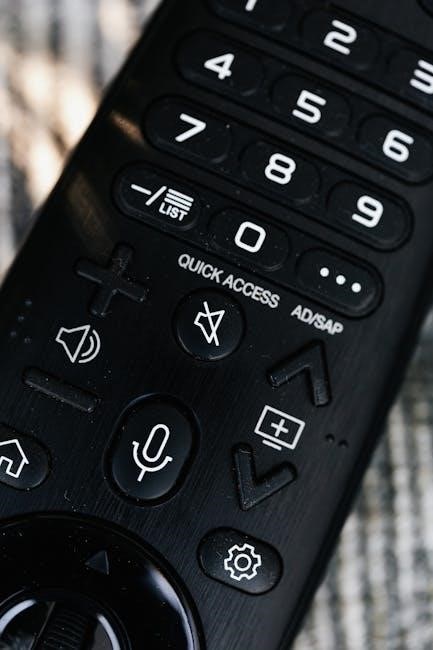
Familiarizing yourself with the remote’s layout is crucial for seamless operation. Typically, you’ll find power buttons for both the fan and light, alongside speed control buttons (High, Medium, Low, and sometimes Breeze Mode). A dedicated ‘Reverse’ button alters the fan’s direction for seasonal comfort.
Light control buttons manage brightness, often including a dimming function. Many models feature a timer button for automated operation. The remote also houses a combination code setting area, usually dip switches, vital for preventing interference. Understanding each button’s function, as illustrated in the diagrams within this manual, will maximize your control and enjoyment of your Fanimation ceiling fan.
Receiver Unit Components & Functionality
The receiver unit, typically housed within the fan’s canopy, is the brain connecting the remote to the fan motor and light. Key components include the dip switch bank for setting the combination code – mirroring the remote’s settings to establish communication. It also features wiring terminals for connecting to the fan motor, light kit, and power source.
The receiver translates the remote’s signals into commands for the fan. Proper installation and correct dip switch configuration are essential for reliable operation. Ensure secure wiring connections and adherence to the wiring diagram provided. The receiver’s functionality directly impacts the fan’s speed control, light dimming, and overall responsiveness to remote commands.

Initial Setup & Pairing
Begin by setting the dip switch combination code on both the remote and receiver, then synchronize them for seamless control of your Fanimation ceiling fan.
Setting the Combination Code (Dip Switch Configuration)
To minimize interference from other remote units, adjusting the combination code via dip switches is crucial. Locate the dip switches on both the remote control transmitter and the receiver unit within the fan’s canopy. The factory setting is typically all switches “up”; avoid this position.
Carefully slide each dip switch to the corresponding position on the receiver to match the settings on your remote. Ensure precise alignment for successful pairing. This creates a unique communication channel between your remote and fan. Remember to document your chosen combination for future reference, especially if resetting is needed. Incorrect settings will prevent proper operation.
Synchronizing the Remote with the Receiver
After setting the dip switch combination, synchronization is necessary for the remote to control the fan. Power on the fan. Within 30 seconds of powering on, repeatedly press the “Power” button on the remote. The fan should begin to run, cycling through speeds for approximately five minutes.
During this cycle, the fan will automatically test both forward and reverse directions. Upon completion, two distinct musical sounds will indicate successful synchronization and speed setting. The fan is now ready for normal operation using the remote. If synchronization fails, repeat the dip switch setting and synchronization process carefully.
Factory Reset Procedure
A factory reset restores the remote and receiver to their original settings, useful for resolving persistent issues or preparing for re-pairing. To initiate a reset, ensure the fan is powered off. Locate the dip switches on both the remote transmitter and the receiver unit within the fan canopy.
Carefully move all dip switches to the “up” position. This is the factory default setting, but avoid leaving them there permanently as it can cause interference. Power on the fan. The reset is complete when the fan responds only to the remote with all dip switches set to the up position; Re-synchronize the remote following the pairing instructions.
Operating Your Fanimation Fan
Effortlessly control your fan’s speed, direction, and lights with the remote! Enjoy summer and winter modes, plus convenient timer functions if equipped.
Powering On/Off the Fan
Initiating fan operation is straightforward using your Fanimation remote. Typically, a dedicated “Power” button, often symbolized by a circle with a vertical line, activates or deactivates the fan. Pressing this button once will turn the fan on to its previously selected speed setting. A subsequent press will turn the fan off completely.
Some models may feature a momentary press for on/off functionality, while others require a slightly longer press to register the command. During the initial setup and pairing process, the fan may run briefly for approximately five minutes to confirm successful synchronization. Following this, the fan is ready for normal operation, responding reliably to power commands from the remote.
Controlling Fan Speed (Multiple Speed Settings)
Fanimation remotes offer precise control over your fan’s speed, typically featuring multiple settings for customized comfort. Dedicated buttons, often marked with incremental speed indicators (e.g., Low, Medium, High), allow you to easily adjust airflow. Pressing these buttons cycles through the available speeds.
Some advanced models, like the Levon Custom DC, may offer even finer speed adjustments. During the initial pairing, the fan runs to confirm speed settings. Ensure the remote and receiver dip switches are aligned for proper function. Experiment with different speeds to find the optimal balance between airflow and energy efficiency, tailoring the fan’s performance to your specific needs and preferences.
Reversing Fan Direction (Summer/Winter Mode)
Fanimation fans feature a reverse function, optimizing comfort year-round. In summer mode, the fan pushes air downwards, creating a cooling breeze. To activate, use the dedicated “Reverse” button on your remote. The fan will briefly run in both directions during the pairing process.
During winter mode, the fan pulls air upwards, circulating warm air trapped near the ceiling. This provides more even heating and can reduce energy costs. Again, utilize the “Reverse” button to switch modes. The fan will run for approximately five minutes, emitting two musical sounds upon completion of the setting process. Ensure proper pairing for reliable operation.
Using the Light Function (Dimming & On/Off)
Fanimation remotes offer convenient control of your fan’s integrated light. The dedicated “Light” button toggles the light on and off. Many models also support dimming functionality, allowing you to adjust the brightness to your preference.
To dim the light, press and hold the “Light” button; the light will gradually dim. Release the button at your desired brightness level. Some remotes feature separate dimming buttons for precise control. Ensure your bulb is compatible with dimming features for optimal performance. If the light doesn’t respond, check the bulb and remote batteries. Proper synchronization is crucial for light control functionality.

Advanced Features & Troubleshooting
Explore timer settings, smart fan integration options, and solutions for common issues like unresponsive remotes or interference from other devices.
Timer Functionality (If Applicable)
Certain Fanimation remote models offer convenient timer functionality, allowing for automated fan operation. This feature enables you to pre-set a duration for the fan to run before automatically powering off. To activate the timer, typically a dedicated timer button is pressed, followed by adjustments to set the desired runtime – often in increments of 30 minutes or 1 hour.
The fan will then operate at the currently selected speed and direction for the specified time. Upon completion, the fan will return to its previous state or power off completely. Refer to your specific model’s instructions for detailed timer operation, as button sequences and available settings may vary. This feature promotes energy savings and enhanced comfort.
Smart Fan Integration (If Applicable)
Modern Fanimation fans are increasingly designed for integration with smart home ecosystems. While not all models offer this capability directly, compatibility with platforms like Amazon Alexa or Google Assistant may be available through optional smart fan modules or hubs.
These integrations allow voice control of fan speed, direction, and light functions. Users can also create automated schedules and routines, linking fan operation to other smart devices. Setup typically involves connecting the fan module to your home Wi-Fi network and enabling the Fanimation skill or action within your chosen smart home app. Check your fan’s specifications to confirm smart home compatibility and available features.
Troubleshooting Common Issues (No Response, Intermittent Operation)
If your Fanimation remote isn’t responding, first ensure fresh batteries are correctly installed. Verify the receiver unit is powered on and within range of the remote (typically 15-20 feet). If operation is intermittent, check for potential interference from other remote-controlled devices.
To address interference, re-set the combination code (dip switches) on both the remote and receiver, ensuring they match but are not all in the “up” position. A factory reset of both units can also resolve pairing issues. If problems persist, confirm the receiver is properly wired and that no obstructions block the signal path.
Addressing Interference from Other Remote Units
Interference can disrupt Fanimation remote functionality. To mitigate this, the primary solution is adjusting the combination code using the dip switches located within both the remote transmitter and the receiver unit. Ensure the dip switch positions precisely mirror each other, but crucially, avoid setting all switches to the “up” position – this is the factory default and prone to conflict.
Experiment with different dip switch configurations to find a unique setting that eliminates interference. If issues persist, consider the proximity of other wireless devices. Reducing the distance or relocating potential sources of interference may improve performance. A complete reset of both remote and receiver can also help establish a clean connection.

Specific Model Guides
Explore detailed instructions tailored to your Fanimation remote: CR500, Levon Custom DC, and JY1004. Each guide offers unique setup and feature explanations.
Fanimation CR500 Remote Control – Detailed Instructions
The CR500 remote offers comprehensive fan control. Begin by verifying the dip switch settings on both the remote and receiver unit are identically configured – factory setting is all up, avoid this position! After confirming the code, synchronize the remote by powering on the fan.
To operate, use the power button to turn the fan on or off. Adjust fan speed using the designated speed buttons. The reverse function controls summer/winter mode. Light control includes on/off and dimming capabilities.
If the fan runs for five minutes then stops with two musical sounds, the control and speed setting process is complete. For troubleshooting, ensure batteries are fresh and there’s no interference. Download the full PDF manual for detailed diagrams and warranty information.
Levon Custom DC Remote Control – Specific Features
The Levon Custom DC remote is designed for advanced DC motor fans, offering precise control and energy efficiency. Initial setup requires careful attention to the combination code (dip switch configuration) on both the remote and receiver. Ensure these match exactly to avoid operational issues.
This remote features intuitive speed control, allowing for granular adjustments to airflow. The reverse function seamlessly switches between summer and winter modes. Light functionality includes dimming options for customized ambiance.
Troubleshooting often involves checking battery levels and potential interference. Refer to the full PDF manual for detailed instructions, warranty details, and FCC compliance information. Proper synchronization is key for optimal performance.
JY1004 Ceiling Fan Remote Controller – Setup & Pairing
The JY1004 remote requires a specific pairing process for optimal functionality. Begin by ensuring the receiver unit’s dip switches precisely mirror the settings on the remote transmitter. This establishes a unique communication code, preventing interference.
After setting the dip switches, power on the fan. The JY1004 will initiate a self-test, running the fan in both directions for approximately five minutes. Successful pairing is indicated by two distinct musical tones.
If pairing fails, double-check the dip switch alignment and battery levels. Consult the downloadable PDF manual for detailed diagrams and troubleshooting steps. This controller offers standard speed and direction control, alongside light operation.

Maintenance & Warranty
Ensure longevity by replacing batteries promptly and cleaning the remote with a soft cloth. Warranty details and claim processes are available in the full manual.
Battery Replacement Instructions
Maintaining optimal performance requires regular battery checks and timely replacements. Your Fanimation remote typically uses AAA or AA batteries, depending on the model – consult the specific model guide for confirmation. To access the battery compartment, gently slide or lift the cover, usually located on the back of the remote.
Remove the old batteries, noting the correct polarity (+ and -) indicated inside the compartment. Insert new batteries, ensuring proper alignment. Replace the battery cover securely. Dispose of used batteries responsibly, following local regulations. Low battery power can cause intermittent operation or reduced range; prompt replacement will restore full functionality; Always use high-quality batteries for best results.
Cleaning and Care of the Remote
To ensure longevity and maintain a responsive remote, regular cleaning is recommended. Always power off the remote before cleaning. Use a soft, dry cloth to wipe down the exterior, removing dust and fingerprints. For stubborn marks, lightly dampen the cloth with water – never use abrasive cleaners, solvents, or excessive moisture.
Avoid direct sunlight and extreme temperatures, as these can damage the remote’s internal components. Do not immerse the remote in water or any other liquid. Store the remote in a dry, safe place when not in use. Proper care will help prevent corrosion and ensure reliable operation for years to come.
Warranty Information & Claim Process
Fanimation remotes are warranted against defects in materials and workmanship for a period of one year from the date of purchase. This warranty covers repair or replacement of the remote, at Fanimation’s discretion. Damage due to misuse, abuse, or unauthorized modification is not covered.
To initiate a warranty claim, contact Fanimation Support with proof of purchase (receipt or invoice) and a detailed description of the issue. You may be asked to return the remote for inspection. Shipping costs for warranty claims are the responsibility of the customer. Visit the Fanimation website for complete warranty details and claim submission instructions.
FCC Compliance Information
This device complies with Part 15 of the FCC Rules. Operation is subject to the following two conditions: (1) This device may not cause harmful interference, and (2) this device must accept any interference received, including interference that may cause undesired operation.
Caution: Changes or modifications not expressly approved by Fanimation could void the user’s authority to operate the equipment. This equipment has been tested and found to comply with the limits for a Class B digital device, pursuant to Part 15 of the FCC Rules. These limits are designed to provide reasonable protection against harmful interference in a residential installation.

Additional Resources
Explore further! Download the complete PDF manual, contact Fanimation support directly, or browse our frequently asked questions for quick answers.
Downloading the Full PDF Manual
Access the comprehensive PDF version of the Fanimation Remote Control Manual for an in-depth understanding of your fan’s operation. This downloadable resource contains detailed safety instructions, complete warranty information, and crucial FCC compliance details often not included in quick-start guides. The full manual expands upon the topics covered here, offering expanded troubleshooting steps and diagrams for clearer understanding;
You’ll find additional information regarding specific model features, advanced settings, and potential compatibility issues. Downloading the PDF ensures you have the most up-to-date information at your fingertips, allowing for a smoother and more enjoyable experience with your Fanimation ceiling fan. A direct download link is available here.
Contacting Fanimation Support
Need further assistance with your Fanimation remote or fan? Our dedicated support team is ready to help resolve any issues you may encounter. We understand that setting up and operating your ceiling fan can sometimes present challenges, and we’re committed to providing excellent customer service.
You can reach Fanimation Support through several convenient channels, including a dedicated phone line and email address. Visit our website at [Insert Fanimation Website Address Here] for contact details and operating hours. Please have your remote control model number (CR500, Levon DC, JY1004) readily available when contacting support to expedite the assistance process. We strive for prompt and effective solutions.
Frequently Asked Questions (FAQ)
Q: My remote isn’t working. What should I do? First, ensure fresh batteries are installed correctly. Then, re-synchronize the remote with the receiver unit by following the pairing instructions in this manual.
Q: How do I change the combination code? Locate the dip switches on both the remote and receiver. Slide them to matching positions (avoiding all up – the factory setting). This prevents interference.
Q: What does it mean when the fan runs for 5 minutes and makes two musical sounds? This indicates successful synchronization and speed setting completion. Your fan is now ready for normal operation. For more detailed troubleshooting, please refer to the ‘Troubleshooting’ section.